
Protection and Control Engineering
It will be an understatement to say that the Protection and Control Electrical Engineering is the heart and soul of the electrical engineering that focuses on ensuring the safety and reliability of electrical power systems. This discipline plays a crucial role in designing and implementing systems to detect and mitigate faults, ensuring the continued operation of electrical infrastructure while safeguarding equipment and personnel.
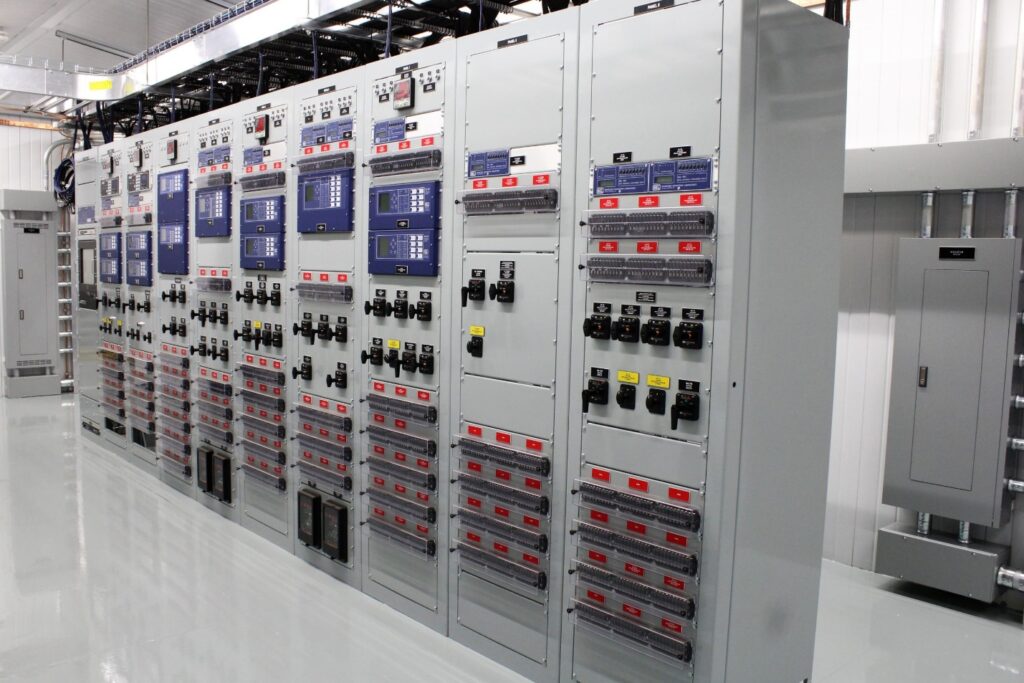
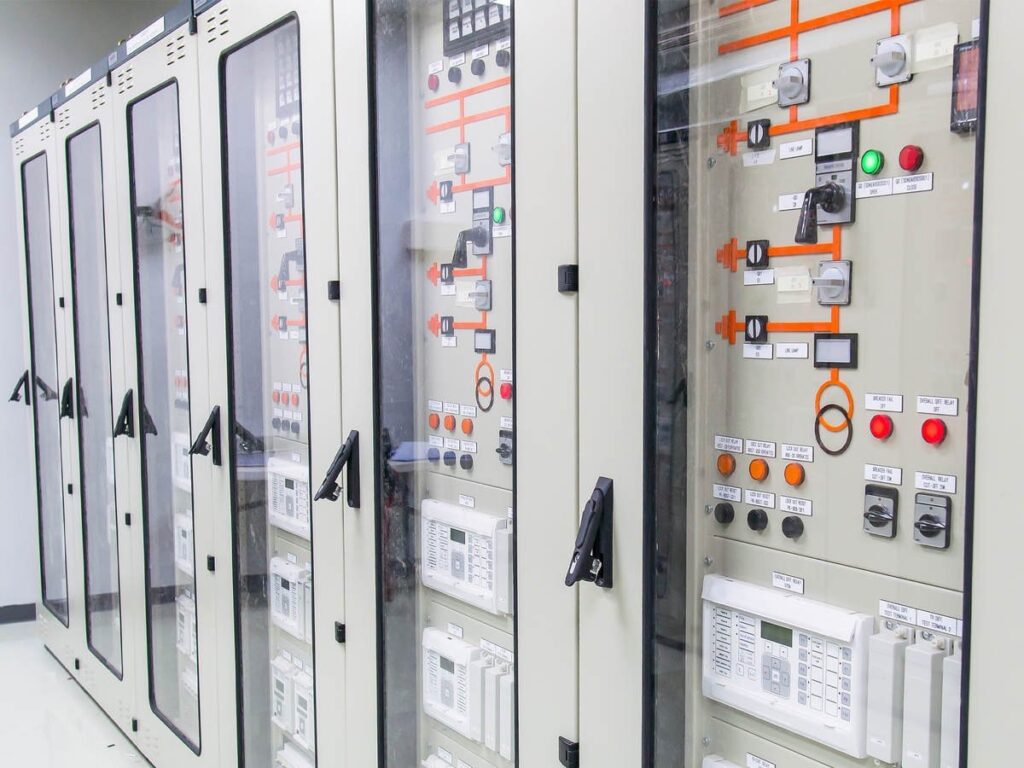
One of the key objectives of Protection and Control Electrical Engineering is to design protective relays and systems that can rapidly detect abnormal conditions in a power system. These abnormal conditions, often referred to as faults, can include short circuits, overloads, and other deviations from normal operating conditions. Protective relays act as the “guardians” of the power system, triggering protective actions to isolate faulty components and prevent widespread disruptions.
Engineers in this field work on developing protection schemes for various elements of the power system, such as generators, transformers, transmission lines, and distribution networks. This involves selecting appropriate protective devices, setting relay coordination, and ensuring that the protection system responds quickly and selectively to faults while avoiding unnecessary tripping of healthy equipment.
Control systems are another crucial aspect of Protection and Control Electrical Engineering. Engineers design and implement control strategies to regulate the operation of power system components and maintain system stability. These control systems help manage factors like voltage, frequency, and reactive power, ensuring that the power system operates within safe and reliable limits.
Automation is a key feature of modern protection and control systems. Engineers integrate intelligent electronic devices (IEDs) and communication technologies to enable real-time monitoring and control of power system components. This allows for rapid decision-making and coordination of protective actions across the power network.
In addition to fault detection and control, engineers in this field focus on cybersecurity to protect power systems from malicious attacks. As power systems become more interconnected and reliant on digital communication, the importance of securing critical infrastructure against cyber threats has become increasingly significant.
Protection and Control Electrical Engineering contribute to the overall reliability and resilience of electrical power systems. By designing robust protection schemes and advanced control systems, engineers ensure that power systems can withstand disturbances, recover quickly from faults, and continue to provide a stable and secure supply of electricity to consumers. The work in this field is essential for maintaining the integrity of power infrastructure and preventing widespread outages.